 Alhilal Healthcare
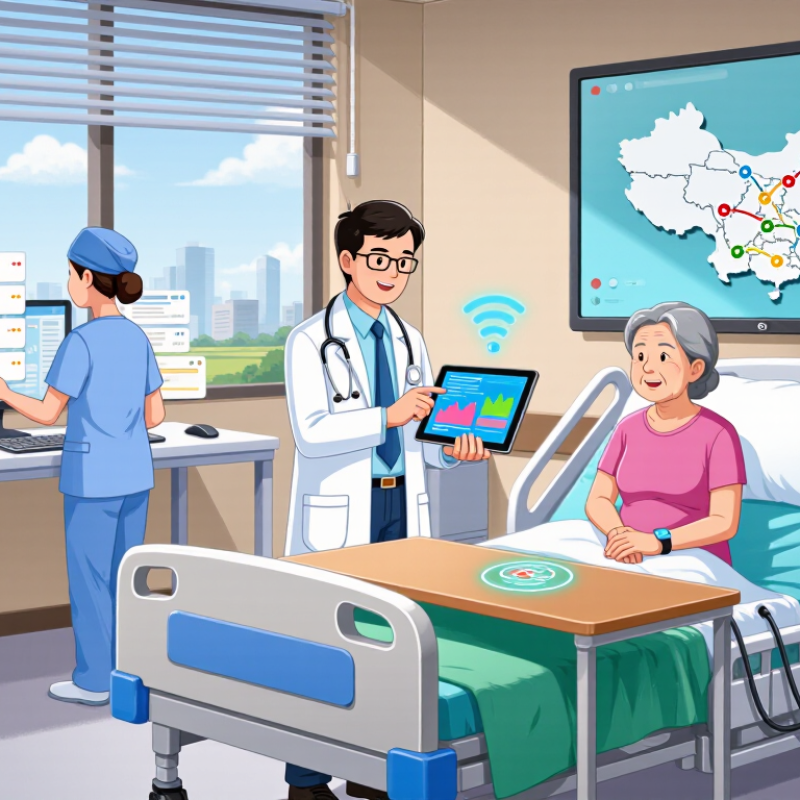
Remote patient monitoring is changing how Chinese hospitals follow patients beyond the clinic. Wearable sensors, connected blood pressure monitors, and mobile health platforms can capture readings at home. Yet adoption is not simply a technology story. It also depends on clinical workflows, patient trust, data quality, and local infrastructure.
So, what are the challenges in remote patient monitoring across China? The answer includes uneven internet access, device accuracy, fragmented data systems, privacy concerns, and unclear responsibilities after an alert. A patient in Shanghai may upload readings smoothly, while an older adult in a rural county may struggle with charging, pairing, or reading instructions. Small obstacles matter.
Clinical teams may also face hundreds of notifications each day. That creates alert fatigue. Poorly designed dashboards can hide urgent changes among routine measurements. Hospitals must validate devices, train staff, and define escalation pathways before relying on remote data. Interoperability remains difficult when platforms use different formats or cannot connect with existing hospital systems.
Payment models and long-term patient engagement require closer attention. Some users stop measuring after several weeks, especially when feedback feels limited. This weakness is easy to underestimate. Reliable programs need simple instructions, culturally appropriate communication, technical support, and measurable clinical outcomes. They also require careful cybersecurity controls and transparent consent processes.
This article examines China’s top ten remote patient monitoring challenges from practical and professional perspectives. It considers what healthcare providers, technology companies, and patients experience in daily use. The discussion is not absolute. Regional differences remain significant, and some solutions still need stronger evidence. That uncertainty deserves honest attention.
China Top 10 Remote Patient Monitoring Challenges?
Remote Patient Monitoring in China: Definition, Scope, and Healthcare Context
Remote Patient Monitoring, or RPM, collects patient data outside hospitals and sends it to healthcare professionals. Common measurements include blood pressure, blood glucose, oxygen saturation, heart rate, and body weight. RPM is not simply an online consultation. It requires devices, secure data transmission, clinical review, and documented follow-up.
China’s RPM scope is expanding with an aging population and rising chronic disease rates. Patients may measure blood pressure at home, while community clinics review abnormal readings. Hospitals can then focus on patients needing specialist assessment. This model may support rural areas, where travel can consume an entire day. Yet access remains uneven. Some households lack reliable internet, suitable devices, or confidence using digital tools.
The hardest issue is not collecting data. It is deciding what deserves attention. A single high reading may reflect stress, poor cuff placement, or a real emergency. Clinical teams need clear thresholds, trained staff, and escalation procedures. Device accuracy also requires regular checking. Data systems must protect privacy and connect with existing medical records. Payment rules and staff workload remain practical barriers. The model is useful, but not flawless. A clinic may receive hundreds of readings daily and lack enough personnel to interpret them safely. That gap deserves more scrutiny.
| No. | Challenge | China Healthcare Context | Effect on RPM Deployment | Priority Level | Recommended Measurement |
|---|---|---|---|---|---|
| 1 | Uneven Regional Access | Medical resources and specialist capacity are concentrated in major urban areas, while rural and less-developed regions may have fewer clinicians, facilities, and digital-health services. | RPM programs may reach well-connected urban patients first and fail to provide consistent follow-up for rural or remote populations. | Very High | Enrollment and clinical-response rates by province, urban/rural location, and healthcare tier. |
| 2 | Fragmented Data Interoperability | Hospitals, primary-care institutions, public-health systems, and home devices may use different data formats, software platforms, and identification processes. | Clinicians may need to review multiple systems manually, increasing duplicate records, delayed alerts, and incomplete patient histories. | Very High | Percentage of readings transferred automatically, duplicate-record rate, and average data-integration time. |
| 3 | Limited and Uneven Reimbursement | Payment for digital monitoring, clinical review, and connected devices is not uniformly established across all diseases, regions, and healthcare settings. | Hospitals may depend on project funding or patient self-payment, making long-term programs difficult to scale and sustain. | Very High | Cost per monitored patient-month, share of reimbursed services, patient out-of-pocket cost, and program continuation rate. |
| 4 | Device Accuracy and Validation | Home measurements can be affected by device quality, calibration, body position, user technique, environmental conditions, and differences between consumer and clinical equipment. | Inaccurate or inconsistent readings can create false alerts, missed deterioration, unnecessary consultations, and reduced clinician trust. | Very High | Agreement with reference measurements, invalid-reading rate, calibration interval, and alert false-positive rate. |
| 5 | Clinical Workflow and Staffing Burden | Many clinicians already manage high outpatient volumes. Continuous home data introduces additional review, documentation, patient communication, and escalation tasks. | Without dedicated roles and triage rules, alert fatigue may occur and clinically important signals may be overlooked. | Very High | Alerts reviewed per staff member, median response time, unresolved-alert rate, and clinician hours per patient-month. |
| 6 | Privacy and Data Security | RPM processes sensitive health information across patients’ homes, mobile networks, cloud services, healthcare institutions, and potentially third-party service providers. | Weak access controls, unclear data-sharing responsibilities, or insecure transmission can create compliance, safety, and public-trust risks. | Very High | Security incidents, access-log exceptions, encryption coverage, consent completion, and time to close vulnerabilities. |
| 7 | Low Digital and Health Literacy | Older adults and patients with chronic diseases may have difficulty installing applications, pairing devices, interpreting readings, or responding to digital instructions without support. | Poor setup and irregular use reduce data completeness and may widen health inequalities between digitally confident and less-connected patients. | High | Device-activation success, weekly adherence, technical-support requests, and completion rates by age and education group. |
| 8 | Connectivity and Home Infrastructure | Mobile and broadband coverage is extensive but not uniform in all locations. Power interruptions, limited bandwidth, shared phones, and unavailable technical support can affect home monitoring. | Missing or delayed readings can make patients appear clinically stable when the actual problem is a technical transmission failure. | High | Transmission success rate, offline duration, missing-data episodes, and technical failure rate by location. |
| 9 | Unclear Accountability for Alerts | RPM involves patients, families, hospitals, primary-care providers, device suppliers, and technical operators. Responsibility for reviewing and escalating abnormal readings must be defined. | Ambiguous responsibility can delay intervention, especially outside clinic hours or when patients move between healthcare institutions. | High | Percentage of alerts with an assigned owner, escalation completion rate, after-hours response time, and documented clinical actions. |
| 10 | Evidence, Standards, and Long-Term Adoption | RPM effectiveness depends on disease-specific protocols, validated outcome measures, standardized operating procedures, and evidence that benefits justify costs in routine Chinese care. | Short pilots may demonstrate technical feasibility but fail to prove sustained improvements in outcomes, utilization, equity, or total cost of care. | High | Patient adherence over 6–12 months, hospitalization rate, disease-control indicators, patient-reported outcomes, and cost per clinical outcome. |
It collects health readings outside hospitals and sends them to healthcare professionals. Common measurements include blood pressure, glucose, oxygen saturation, heart rate, and weight. It is more than an online consultation. Devices, secure transmission, clinical review, and follow-up are all required.
An aging population and rising chronic disease rates increase demand for regular monitoring. Home measurements can reduce unnecessary hospital visits. Rural patients may avoid travel lasting an entire day. Access remains uneven, though.
A high reading may reflect stress, incorrect cuff placement, or a genuine emergency. Staff need symptoms, medication information, and measurement conditions. Numbers can mislead. Clear thresholds and escalation procedures are essential.
Clinics may receive hundreds of readings during one shift. Repeated low-risk alerts can hide urgent changes. Teams need prioritization rules, trained staff, and documented responses. Otherwise, alert fatigue becomes a safety concern.
Health information should be collected, stored, accessed, and deleted carefully. Patients need informed consent, especially when relatives share readings. Strong passwords, audit trails, and secure devices reduce exposure risks. Trust takes time.
Not always. Poor interoperability may prevent home readings from entering medical records correctly. Staff may then copy information manually. This creates delays and possible entry errors. The gap deserves scrutiny.
Patients need simple instructions for device placement, internet use, and accurate data entry. Staff need escalation rules, privacy procedures, and documentation standards. A loose cuff can distort a blood pressure result. Training is often underestimated.
Responsibility may involve patients, clinicians, hospitals, and technology providers. The answer depends on instructions, alert review, documentation, and patient response. Liability remains complicated. Some plans look complete on paper, but real homes are less predictable.
Remote patient monitoring in China is expanding as healthcare providers seek to improve access, continuity of care, and chronic disease management across both urban and rural areas. By using connected devices and digital platforms to collect health information outside hospitals, it can support earlier intervention and more personalized follow-up. However, what are the challenges in remote patient monitoring? Major obstacles include uneven internet access, unreliable power or device performance, limited digital literacy, inconsistent data quality, and difficulties adapting solutions to different regional healthcare conditions.
The article examines ten key challenges, including patient engagement, affordability, interoperability, clinical workflow integration, and the shortage of trained professionals who can interpret incoming data. It also highlights concerns about privacy protection, data governance, informed consent, cybersecurity, and the need for clear regulatory standards. Sustainable progress will depend on improving connectivity, strengthening device validation, establishing secure data-sharing practices, training healthcare workers, and creating patient-centered programs that fit China’s diverse communities and healthcare systems.
