Alhilal Healthcare
Telemedicine is changing how patients reach clinicians, especially when distance, mobility, or staffing limits traditional care. A video consultation can connect a rural patient with a specialist hundreds of miles away. A secure message may clarify medication instructions before a minor concern becomes urgent. These moments show how does telemedicine change patient care in practical, human terms.
The impact extends beyond convenience. Remote monitoring can transmit blood pressure, glucose readings, or heart rhythms from a patient’s home. Clinicians may identify troubling trends earlier and adjust treatment with fewer unnecessary visits. Telemedicine also supports follow-up care, mental health services, chronic disease management, and specialist referrals. However, reliable care still depends on trained professionals, secure platforms, informed consent, and clear clinical protocols. Technology should support judgment, not replace it.
Its benefits are real, but not universal. Poor internet access, limited digital skills, language barriers, and inaccessible devices can exclude vulnerable patients. Some symptoms also require physical examination, laboratory testing, or emergency intervention. A video call cannot always reveal subtle breathing changes or a patient’s living conditions. Evidence from healthcare institutions and peer-reviewed research supports careful, measured adoption rather than exaggerated promises. Patient experience matters too. A stable connection, private room, and attentive clinician can build trust; a frozen screen can quickly weaken it. Telemedicine is powerful, but imperfect. Its future should be evaluated through safety, equity, clinical outcomes, and patient feedback—not novelty alone.
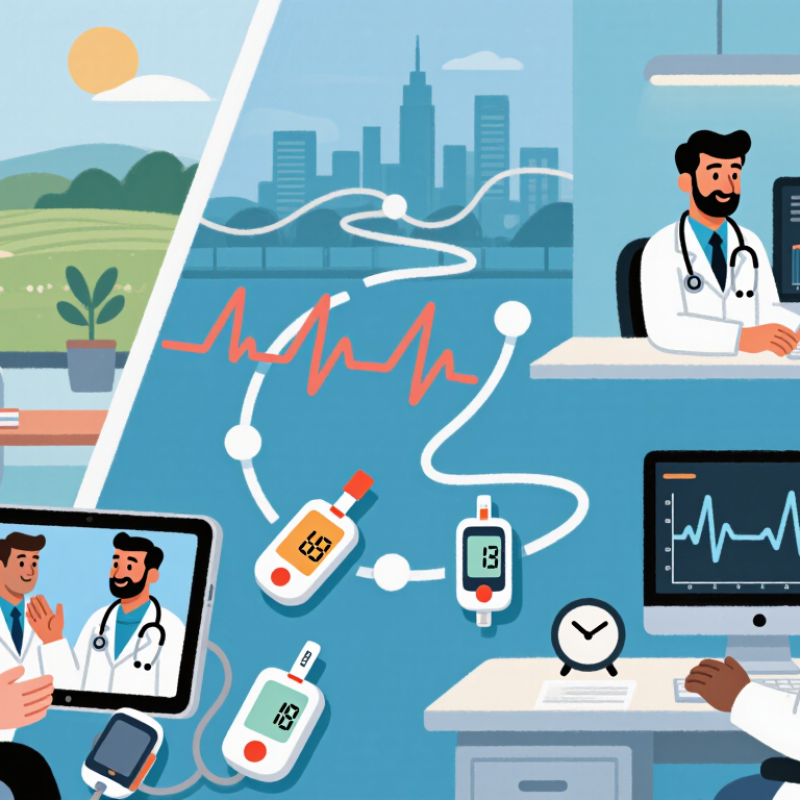
Telemedicine changes patient care by moving clinical conversations beyond hospital walls. It uses video visits, phone calls, secure messages, and remote monitoring to connect patients with licensed professionals. A nurse may review blood pressure readings from a patient’s kitchen. A physician may examine a rash through a phone camera, though image quality can mislead.
Care usually follows a simple pathway. The patient requests an appointment, shares symptoms, and completes a remote assessment. The clinician reviews medical history, explains possible options, and decides whether in-person care is needed. Digital records support continuity between visits.
The World Health Organization’s Global Observatory for eHealth reported that 58% of surveyed countries offered telemedicine services in 2015. Later global studies showed rapid expansion during the pandemic, but access remained uneven. Internet costs, language barriers, disability, and limited digital skills still affect outcomes.
Tips: Use a quiet, well-lit room. Test the microphone first. Keep medicines nearby. Write down symptoms and questions. Do not hide uncertainty; tell the clinician when something feels unclear. Remote care is convenient, but it is not perfect. A poor connection can hide breathing difficulty. A camera cannot replace every physical examination. Reliable services therefore include clear escalation rules, privacy protections, and follow-up options. The OECD’s health-system analysis also emphasizes that digital consultations work best when integrated with traditional care, rather than treated as a complete replacement.
Telemedicine expands healthcare access by moving part of care beyond hospital walls. A patient in a remote village can speak with a clinician using a basic smartphone. A nurse can review a wound through a clear camera image. These small moments matter when transport takes four hours.
The International Telecommunication Union reported that 5.4 billion people used the internet in 2023. Yet 2.6 billion people remained offline. This gap limits telemedicine’s promise, especially for older adults, low-income families, and rural communities. Access also depends on electricity, language support, affordable data, and private spaces for consultations. Technology alone cannot solve these barriers.
The World Health Organization identifies digital health as an important tool for strengthening primary care and improving continuity. Remote consultations can support medication follow-up, mental health care, and chronic disease monitoring. However, remote care is not always better. A clinician may miss a subtle skin color change, breathing pattern, or painful movement. Poor connections can weaken trust. Some patients also feel rushed when care happens through a screen. My concern is simple: expansion should not mean substitution. Health systems need local clinics, trained staff, safe data practices, and clear referral pathways alongside virtual services. Telemedicine works best when it connects people to care, rather than asking technology to replace care.
Digital consultations are changing diagnosis by moving the first clinical conversation beyond the clinic. A patient can show a rash through a phone camera, describe dizziness from home, or upload blood pressure readings before an appointment. The clinician then combines symptoms, history, and available data. In 2021, 25.5% of adults in the United States used telehealth, according to the National Center for Health Statistics. That level suggests lasting acceptance, not only emergency use.
Treatment decisions also become more continuous. A nurse can check wound healing through scheduled video calls. A physician can review glucose logs before adjusting therapy. The OECD’s Health at a Glance 2023 report found that teleconsultations remained above pre-pandemic levels in many member countries. This matters for rural patients and people with mobility limitations. Still, digital access does not guarantee good care. Poor lighting can hide skin changes. Unclear audio can distort a patient’s explanation. Some diagnoses still require palpation, imaging, or laboratory testing.
Clinical judgment must therefore include a clear escalation plan. The World Health Organization’s Global Strategy on Digital Health emphasizes safe, equitable, and evidence-based digital care. That standard is demanding. A remote consultation should not become a shortcut. Clinicians need verified patient identity, reliable records, privacy safeguards, and follow-up instructions. My concern is simple: convenience can appear successful when missed symptoms remain invisible. Telemedicine works best when digital assessment and in-person examination support each other, rather than compete.
Telemedicine changes patient care by moving some consultations beyond hospital walls. In rural areas, a nurse can connect a patient with a specialist hundreds of kilometers away. This reduces travel, waiting, and missed work. The OECD’s Health at a Glance 2023 reports that teleconsultations remained above pre-pandemic levels in many member countries. Access improved.
However, benefits differ sharply across countries. The ITU’s Facts and Figures 2023 estimates that 2.6 billion people remained offline. Poor connectivity excludes them. Older adults may also struggle with passwords, cameras, or confusing portals. A video call cannot replace every physical examination. Chest sounds, skin texture, and subtle movement may be missed. Privacy risks also increase when patients speak from crowded homes. The system is useful, but not universally equal. That deserves more honesty.
Tips: Health services should offer telephone appointments, local digital support, and in-person alternatives. Clinicians should confirm identity, explain data handling, and document limitations. Patients can prepare medicines, symptoms, and recent readings before calling. Keep a backup plan. Policymakers should measure outcomes by region, age, income, disability, and language—not only total appointment numbers. WHO guidance on digital health stresses equity, governance, and workforce readiness. Those standards are sensible, although real implementation remains uneven.
Telemedicine expands access to specialist care, supports remote diagnosis, and reduces travel barriers, especially for rural and underserved communities. However, availability differs across countries because of internet access, clinical regulation, reimbursement, privacy, and digital health infrastructure.
The chart shows the percentage of countries reporting use of selected telemedicine services in the World Health Organization's global digital health survey. Source: WHO, Global Strategy on Digital Health 2020–2025.
Telemedicine may shape global healthcare by moving appropriate care closer to daily life. A video review can spare a patient a six-hour bus journey. A remote specialist can examine a wound through a trained local nurse. WHO’s third global eHealth survey reported telemedicine services in 58% of countries. That distinction matters. Not always.
Future systems will likely blend virtual and physical encounters. Clinicians could receive home blood-pressure readings before adjusting treatment. Diagnostic images may travel securely to regional experts. OECD Health at a Glance 2023 recorded a sharp rise in teleconsultations during the pandemic. It also found higher use in many countries afterward. This persistence suggests convenience, but not automatic clinical value. Poor internet, language barriers, and missing examinations can still delay a correct decision. Sometimes, the screen is the limitation.
Equitable growth will depend on infrastructure, workforce training, and clear clinical safeguards. In 2023, the World Bank and WHO reported a major access gap. About 4.5 billion people lacked full coverage of essential health services in 2021. Telemedicine cannot solve that gap alone. It can extend scarce expertise, especially for follow-up care and mental health support. However, health systems need local triage, accessible devices, and strong data protection. Some patients may prefer a clinic. Their hesitation deserves evidence, not marketing.
How Telemedicine May Shape the Future of Global Healthcare
| Data Dimension | Global or Regional Measure | Reference Year | What the Data Shows | Implication for Telemedicine | Source |
|---|---|---|---|---|---|
| People using the Internet worldwide | Approximately 67% of the global population | 2023 | About 5.4 billion people were online, while roughly 2.6 billion remained offline. | Expands potential reach Digital consultations can serve more people, but offline populations still require non-digital care pathways. |
International Telecommunication Union, Facts and Figures 2023 |
| Urban–rural digital access gap | 81% urban users vs. 50% rural users globally | 2023 | Internet use was substantially higher in urban areas than in rural areas. | Equity challenge Telemedicine programs need community access points, affordable connectivity, and telephone-based alternatives. |
International Telecommunication Union, Facts and Figures 2023 |
| Internet use by income group | 93% in high-income economies vs. 27% in low-income economies | 2023 | Connectivity remains strongly associated with national income levels. | Requires inclusive design Low-bandwidth services, local-language support, and public investment are essential for global adoption. |
International Telecommunication Union, Facts and Figures 2023 |
| Mobile broadband network availability | More than 95% of the world’s population covered by a 4G network | 2023 | Mobile networks provide a wider foundation for remote health communication than fixed broadband alone. | Supports mobile care Appointment messaging, remote triage, health education, and follow-up can reach patients through mobile devices. |
International Telecommunication Union, Facts and Figures 2023 |
| Countries using telemedicine during service disruption | 58% of countries reported using telemedicine to replace in-person consultations | 2020 | Telemedicine became an important continuity mechanism during the COVID-19 disruption to health services. | Improves resilience Remote care can help maintain follow-up, triage, and selected consultations during emergencies. |
World Health Organization, Pulse Survey on Continuity of Essential Health Services During the COVID-19 Pandemic |
| Countries reporting disruption to essential health services | 90% of surveyed countries | 2020 | Health systems worldwide experienced interruptions affecting routine and essential services. | Strengthens continuity Virtual appointments can reduce unnecessary travel and preserve access when facilities are overloaded or difficult to reach. |
World Health Organization, Pulse Survey on Continuity of Essential Health Services |
| Projected global health-worker shortage | Shortfall of approximately 10 million health workers | By 2030 | The largest workforce gaps are expected in low- and lower-middle-income countries. | Extends specialist capacity Teleconsultation, remote supervision, and digital training can connect local providers with scarce specialists. |
World Health Organization, Global Strategy on Human Resources for Health: Workforce 2030 |
| Universal health coverage service index | Global index score of 68 out of 100 | 2021 | Access to essential health services remains incomplete worldwide, especially for vulnerable populations. | Supports broader access Telemedicine may reduce geographic barriers, but it should complement—not replace—affordable in-person services. |
World Health Organization and World Bank, Tracking Universal Health Coverage: 2023 Global Monitoring Report |
| Most suitable telemedicine functions | Triage, follow-up, mental-health support, chronic-care monitoring, and specialist referral | Current evidence | Remote care is most effective when physical examination, urgent procedures, or diagnostic testing are not immediately required. | Changes care delivery Care becomes more continuous, distributed, and patient-centered while clinical limits remain important. |
World Health Organization, Global Strategy on Digital Health 2020–2025 |
Data note: Percentages and projections are drawn from international public-health and telecommunications reports. Telemedicine can improve convenience, continuity, and geographic access, but outcomes depend on connectivity, affordability, digital literacy, privacy protection, clinical governance, and the availability of in-person services.
Telemedicine provides healthcare through video calls, phone calls, messages, or shared health readings. It moves some care beyond hospital walls.
Rural patients may avoid a four-hour journey for a basic consultation. People with mobility limitations can speak with clinicians from home.
Not always. About 2.6 billion people remained offline in 2023, limiting digital care for many communities.
Patients may lack electricity, affordable data, reliable internet, language support, or a private room. Older adults may struggle with passwords and cameras.
Patients can show a rash, describe dizziness, or upload blood pressure readings. Clinicians combine these details with medical history and available data.
No. A screen may hide skin texture, breathing changes, painful movement, or chest sounds. Some conditions still require testing or hands-on examination.
Keep medicines, symptoms, recent readings, and questions nearby. Use good lighting and test the connection beforehand. Keep a backup plan.
They should verify identity, protect personal data, document limitations, and provide clear referral pathways. Local clinics and trained staff still matter.
The clinician should arrange an in-person visit, examination, or laboratory test. Convenience is not proof of good care.
It can reduce travel, waiting, and missed work. Yet some patients feel rushed or uncomfortable on screen. That deserves more honesty.
Telemedicine uses digital communication tools to connect patients with healthcare professionals without requiring an in-person visit. Through video consultations, phone calls, messaging, and remote monitoring, it helps deliver medical advice, follow-up care, and health education across long distances. A key question is: how does telemedicine change patient care? It improves access for people in rural, remote, or underserved communities, reduces travel time, and can make healthcare more convenient and responsive.
Digital consultations can support earlier assessment, faster communication, and continuous management of many health conditions. However, telemedicine also has limitations, including restricted physical examinations, unequal internet access, privacy concerns, and differences in healthcare systems between countries. Its effectiveness depends on reliable technology, trained professionals, patient digital skills, and appropriate clinical judgment. As these challenges are addressed, telemedicine may become an important part of global healthcare by combining remote services with face-to-face care and creating more flexible, connected, and patient-centered treatment.
