Alhilal Healthcare Alhilal Healthcare

China Top Modern Diagnostics What Technologies Are Used?

Time:2026-11-02 Author:Amelia
0%

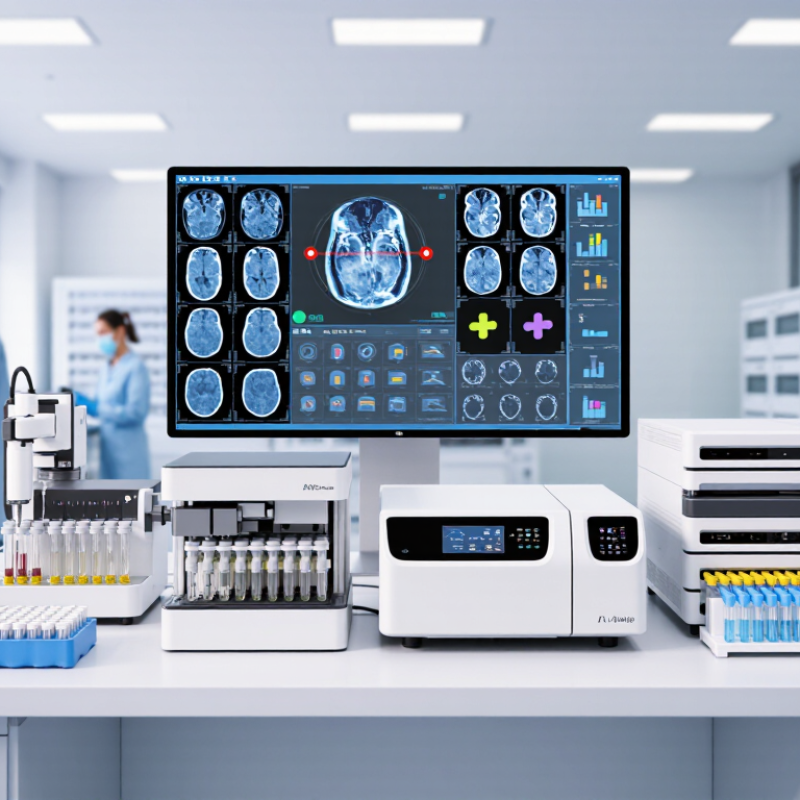
China’s modern diagnostics landscape is being reshaped by molecular testing, automated laboratory systems, advanced imaging, and point-of-care devices. So, what technologies are used in modern diagnostics? The answer increasingly includes PCR and other nucleic-acid tests, next-generation sequencing, AI-assisted image analysis, and compact biosensors. These tools can help clinicians detect disease earlier and make treatment decisions with more precise evidence.

Industry data signals growing investment. Grand View Research valued the global molecular diagnostics market at US$16.4 billion in 2023 and projected an 11.6% compound annual growth rate from 2024 to 2030. The Lancet Commission on diagnostics, however, highlighted a persistent access gap: an estimated 47% of the world’s population has little or no access to diagnostic services. Technology alone does not close that gap. Instruments need trained staff, reliable reagents, quality controls, and practical links to patient care.

“An accurate diagnosis is the first step to getting effective treatment,” said Dr. Mariângela Simão, then WHO Assistant Director-General for Access to Medicines, Vaccines and Pharmaceuticals, when WHO introduced its Essential Diagnostics List in 2018. That principle matters in China, where advanced equipment must work beyond showcase hospitals and fit the realities of regional clinics. A sequencer or AI tool is not automatically useful. It must be validated, maintained, and interpreted carefully. The details matter. This overview examines the technologies behind modern diagnostics, what they can do, and where their limits remain. Some progress is real; some claims still deserve scrutiny.
China Top Modern Diagnostics What Technologies Are Used?

What Modern Diagnostics Include in China

Modern diagnostics in China include medical imaging, laboratory testing, pathology, and newer molecular methods. In hospitals, clinicians may combine blood counts and chemistry panels with ultrasound, X-rays, CT, or MRI. Each test answers a different question; a scan can show structure, while a blood test can reveal changes that are not visible on an image.

Molecular diagnostics can detect selected genetic material or markers in a sample, supporting the assessment of certain infections and cancers. Pathology specialists examine tissue under a microscope, sometimes adding molecular analysis to clarify a finding. Digital systems help store images and test results, and some sites use AI tools to flag areas for review. Human interpretation still matters. A flagged result is not a diagnosis.

The exact services vary by hospital, city, and clinical need. A patient might have blood drawn in the morning, then receive imaging after a clinician reviews the symptoms and examination. Results need context: age, medication, medical history, and sample quality can all affect interpretation. More testing is not always better. Some reports use technical language, and follow-up explanations may feel rushed; asking what a result means, and whether repeat testing is needed, can help patients make informed decisions.

Advanced Medical Imaging Technologies Used in China

China’s imaging landscape includes CT, MRI, ultrasound, digital radiography and PET-CT. Modern scanners capture fine anatomical detail, while software reconstructs images from multiple angles. In busy hospitals, CT is often used to assess trauma, lung findings and suspected stroke. MRI offers detailed views of the brain, joints and soft tissues without ionizing radiation. It takes longer. Ultrasound provides real-time views of blood flow and abdominal organs, and can be useful at the bedside. PET-CT combines metabolic information with anatomy, supporting selected cancer evaluations.

The equipment is only part of the examination. Technologists position patients, select protocols and check image quality; radiologists interpret findings alongside symptoms and prior scans. Dose control matters in CT, especially for children and repeat imaging. MRI safety screening also requires attention to implants and metal objects.

Some centers use AI tools to flag findings or assist image reconstruction, but clinicians must review their output. Access and expertise can differ between major cities and smaller facilities. A sharper image is not automatically a better diagnosis. Context matters. Patient motion or delayed reporting can still affect care, and these practical details deserve more attention.

Molecular and Genetic Testing Methods

Molecular and genetic testing can reveal changes that routine blood counts or imaging may miss. A clinician may order polymerase chain reaction testing to look for a specific genetic signal, such as a pathogen’s DNA or RNA. The sample might be a swab, blood tube, or small tissue fragment. Careful collection matters. Contamination or poor storage can affect results, so laboratories use controls to check that each run is working as expected.

For inherited conditions and some cancers, targeted gene panels examine selected regions of DNA. Sequencing can identify variants, while methods such as fluorescence in situ hybridization help detect certain chromosome changes. Each method answers a different question; broader testing is not automatically better. Results must be interpreted alongside symptoms, family history, and other clinical findings. A variant may be uncertain, and its meaning can change as evidence grows.

Good diagnostics involve more than producing a report. Laboratory staff review sample quality, confirm unexpected findings when appropriate, and communicate limitations clearly. Even then, an accurate result may not explain every symptom. That part can be frustrating. I think reports sometimes make uncertainty look tidier than it feels in practice; patients deserve plain explanations and a chance to discuss what a result can—and cannot—tell them.

China Top Modern Diagnostics: What Technologies Are Used? — Molecular and Genetic Testing Methods
Method What It Detects Common Diagnostic Applications Typical Specimens Key Characteristics
Real-time PCR (qPCR) Specific DNA sequences; reverse-transcription qPCR can detect RNA after conversion to complementary DNA. Pathogen detection, selected inherited variants, and measurement of specific gene targets. Blood, respiratory swabs, tissue, or other specimen types appropriate to the test. Targeted and generally rapid; the assay must be designed for the sequences being tested.
Multiplex PCR Several predefined DNA or RNA targets in one reaction. Respiratory pathogen panels, selected infectious-disease panels, and targeted mutation testing. Respiratory samples, blood, or other validated clinical specimens. Can test multiple targets together, but detects only the targets included in the assay.
Digital PCR (dPCR) Absolute counts of selected nucleic-acid targets by partitioning a sample into many small reactions. Low-frequency variant detection, copy-number measurement, and monitoring selected molecular markers. Blood, plasma, tissue, or extracted nucleic acid. Highly sensitive for predefined targets; it does not provide broad, untargeted sequence information.
Targeted next-generation sequencing (NGS) DNA or RNA changes across selected genes or genomic regions. Oncology profiling, inherited-disease testing, and selected pathogen or resistance investigations. Tumor tissue, blood, bone marrow, or other validated specimens. Analyzes many regions in parallel; findings require quality control and clinical interpretation.
Whole-exome sequencing (WES) Most protein-coding regions of the genome. Investigation of suspected inherited disorders, often when targeted testing has not identified a cause. Usually blood or saliva-derived DNA. Broad coding-region analysis; it may miss some structural, regulatory, or hard-to-sequence variants.
Whole-genome sequencing (WGS) DNA across coding and non-coding regions of the genome. Selected rare-disease investigations and comprehensive genomic research or clinical analysis. Usually blood or another source of genomic DNA. Offers broad coverage, but interpretation, data management, and validation are important considerations.
Sanger sequencing The nucleotide sequence of a selected DNA fragment. Confirmation of selected sequence variants and analysis of specific genes or regions. Blood, tissue, or extracted DNA. Useful for focused sequencing; it is less suited to testing many genes at once.
Chromosomal microarray Genome-wide gains or losses of DNA, including many copy-number changes. Evaluation of congenital anomalies, developmental conditions, and selected constitutional disorders. Usually blood or prenatal specimens, depending on clinical indication. Can detect many deletions and duplications; it generally does not identify most single-nucleotide variants.
Fluorescence in situ hybridization (FISH) Selected chromosome regions, gene rearrangements, or copy-number changes using fluorescent probes. Targeted evaluation of chromosome abnormalities and selected cancer-associated genetic changes. Cells from blood, bone marrow, tissue, or other relevant specimens. Targets specific regions chosen for the test; it is not a genome-wide sequencing method.
RNA sequencing (RNA-seq) RNA expression patterns and, in suitable workflows, selected gene fusions or transcript changes. Selected tumor profiling, fusion detection, and investigation of gene-expression changes. Fresh, frozen, or appropriately preserved tissue, depending on the assay. Results depend on RNA quality and the analysis method; expression findings may require clinical context.

Automated Laboratory Testing and Point-of-Care Diagnostics

Modern diagnostics rely on two connected settings: automated laboratories and point-of-care testing. In central laboratories, bar-coded samples move through analyzers that measure blood chemistry, cell counts, or infection markers. Automation can process many samples consistently and reduce repetitive handling. Yet reliable results still depend on calibration, quality controls, and trained staff reviewing unusual findings. Machines do not interpret every result correctly.

Point-of-care devices bring selected tests closer to patients, such as glucose checks or rapid infection screening in clinics. This can shorten the wait between sampling and clinical decisions. That matters. The Lancet Commission on Diagnostics reported in 2021 that about 47% of people worldwide had little or no access to diagnostics, while 19% lacked access to basic tests. Its findings underline why accessible testing matters, not just faster laboratory throughput.

The two approaches work best as a pathway, not as rivals. A clinic may use a quick bedside test, then send a complex or uncertain sample to an automated laboratory. WHO’s Model List of Essential In Vitro Diagnostics helps health systems identify priority tests for different care settings. Device upkeep, suitable sample handling, and clear result reporting remain essential. Point-of-care testing is not automatically simpler; limited staff training or poor-quality samples can undermine its speed. Automation helps, but thoughtful implementation still takes work.

How AI and Digital Health Support Diagnostic Technology

China Top Modern Diagnostics: How AI and Digital Health Support Diagnostic Technology

AI and digital health are helping Chinese care teams interpret scans, laboratory results, and patient records more efficiently. Image-analysis tools can flag areas that need closer review, while connected systems bring relevant history and test results into one clinical view. Stanford HAI’s 2024 AI Index reported 223 AI-enabled medical devices authorized by the US FDA in 2023. This signals rapid development, not proof that every tool improves care.

In practice, a radiologist might review an AI-highlighted region on a lung scan, then compare it with earlier images and the patient’s symptoms. Remote monitoring can also send measurements, such as blood pressure or glucose readings, to care teams between visits. These tools may support earlier follow-up, especially when patients live far from major hospitals. But poor data quality, uneven access, and algorithmic bias remain real concerns. A flagged result is not a diagnosis; trained clinicians must interpret it and explain uncertainty.

Tips: Check whether a tool has been clinically evaluated for its intended use. Confirm patient data are accurate, and keep clinician review in the workflow. AI can miss things.

Modern Diagnostics: How AI and Digital Health Support Diagnostic Technology

The falling cost of human genome sequencing has helped make genomic testing more accessible.

Modern diagnostics combine technologies such as genomic sequencing, molecular assays, and medical imaging. AI can assist clinicians with tasks such as image analysis and genomic variant interpretation, while digital health tools support the secure sharing of results and remote follow-up. The chart shows sequencing cost, not AI performance.

Source: National Human Genome Research Institute (NHGRI), DNA sequencing cost data; figures shown are approximate historical milestones.

FAQS

What can molecular and genetic tests detect?

They can identify specific genetic signals, selected DNA variants, or certain chromosome changes. A routine blood count may miss these details.

What samples might molecular testing use?

A test may use a swab, blood tube, or small tissue fragment. Careful collection and storage matter.

What is a targeted gene panel?

It examines selected DNA regions linked to inherited conditions or some cancers. Broader testing is not always better.

Does a genetic result always explain a person’s symptoms?

No. A variant may have uncertain meaning, and an accurate result may not explain every symptom. That can be frustrating.

How do automated laboratory tests work?

Bar-coded samples pass through analyzers that measure items such as blood chemistry or cell counts. Staff still review unusual findings.

What helps keep automated test results reliable?

Calibration, quality controls, good sample handling, and trained staff all matter. Machines can make mistakes.

What is point-of-care testing?

It brings selected tests closer to patients, such as a glucose check in a clinic. Results may arrive sooner.

Can a quick clinic test replace laboratory testing?

Not always. A clinic may send complex or uncertain samples to a central laboratory for further testing.

Why can a fast test still give problems?

Limited staff training or a poor-quality sample can undermine results. Speed alone is not enough.

How should patients understand a test report?

Ask what the result can and cannot show. Reports can make uncertainty look tidy, though real-life answers may be messier.

Conclusion

Modern diagnostics in China combine advanced imaging, laboratory science, and digital tools to help clinicians detect disease, assess its progression, and guide care. Imaging methods such as CT, MRI, ultrasound, and digital radiography provide detailed views of the body, while molecular and genetic tests examine biological markers and inherited information. Together, these approaches can support earlier and more precise diagnosis across a wide range of conditions.

When considering what technologies are used in modern diagnostics, automated laboratory systems and point-of-care tests are also important. Automation can process samples efficiently, while near-patient testing may provide results sooner in clinical settings. Artificial intelligence and digital health tools can help organize medical data, identify patterns in images or test results, and support communication between healthcare teams. Their value depends on careful clinical review, reliable data, and appropriate use alongside professional judgment.

Amelia

Amelia

Amelia is a seasoned marketing professional with a wealth of expertise in our company’s core offerings. With an unwavering passion for driving growth and innovation, she plays a pivotal role in shaping our marketing strategies and enhancing brand visibility. A key aspect of her responsibilities......