Alhilal Healthcare
What is the future of digital healthcare solutions? It is not simply more video appointments. It is care that connects clinical records, remote monitoring, and timely decisions—ideally without making patients manage a maze of apps. The shift is already visible. McKinsey’s 2020 report, “Telehealth: A Quarter-Trillion-Dollar Post-COVID-19 Reality?”, found that 46% of surveyed U.S. consumers had used telehealth instead of an in-person visit, compared with 11% before the pandemic. That rapid change shows demand. It does not prove that every digital service improves care.
The next phase will likely bring more connected, data-informed care. A blood pressure reading from a home monitor, for example, may help a clinician spot a concerning trend before a routine appointment. The World Health Organization’s Global Strategy on Digital Health 2020–2025 calls for digital technologies that support equitable, person-centered health systems. That goal matters. Access to a device, a reliable connection, and clear instructions is not universal.
Physician and digital-medicine researcher Eric Topol has said, “The future of medicine is the future of digital medicine.” His statement captures the opportunity, but the practical work is less tidy. Systems must protect privacy, fit clinical workflows, and remain usable for people with different needs. Some tools will help; others may add noise. The future depends on evidence, thoughtful design, and listening to patients—not technology alone.
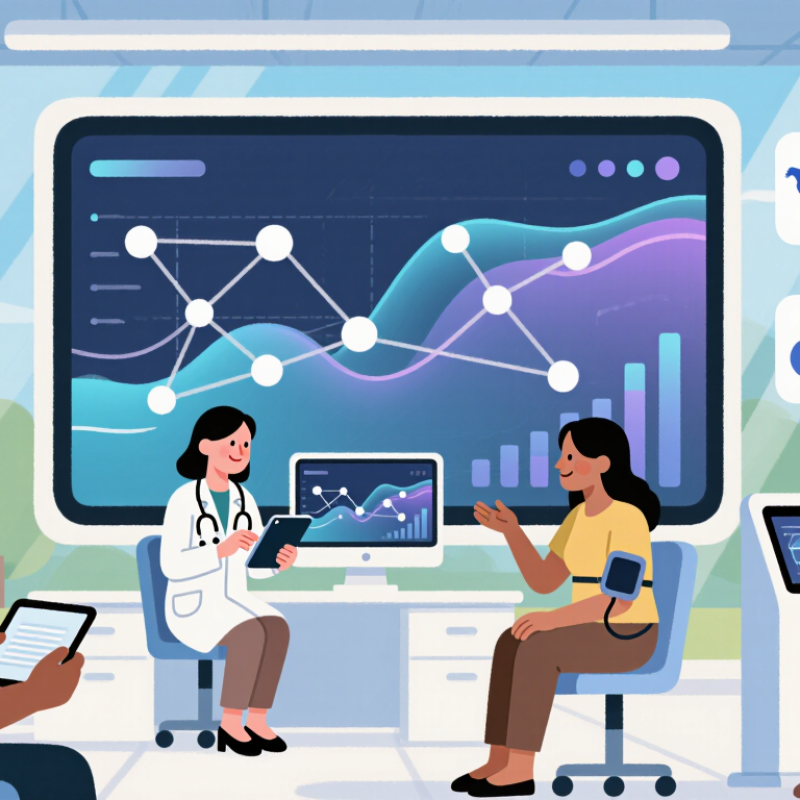
Digital healthcare is a connected set of services, not just a video visit. It includes remote consultations, patient portals, digital prescriptions, home monitoring, and clinical decision support. Each service depends on reliable data: a blood pressure reading from a home cuff, a medication list, or a clinician’s note. The CDC’s National Center for Health Statistics reported that 37% of U.S. adults used telemedicine in 2021. That figure shows how quickly virtual care entered everyday practice, but access and quality still vary.
Behind the screen, electronic health records, health information exchanges, and secure data standards help care teams share relevant information. The Office of the National Coordinator for Health Information Technology reported that 62% of U.S. hospitals engaged in all four domains of interoperable exchange in 2021. Progress is measurable. Yet a record that moves between systems may still be hard to understand or incomplete. Patients can end up repeating details they already shared.
Care settings now extend from hospitals and clinics to homes and community health centers. A nurse may review glucose readings remotely, then arrange an in-person visit when symptoms change. Useful, but not effortless. The World Health Organization’s Global Strategy on Digital Health stresses that digital tools should support people-centered care, not replace it. That distinction matters: good systems make follow-up clearer, protect privacy, and leave room for human judgment when the data do not tell the whole story.
In 2021, U.S. telehealth use was reported at 38 times its pre-pandemic level. That figure captures a rapid change in how people reached care, not a claim that every appointment moved online. The distinction matters. A video visit can help with medication follow-ups, minor symptoms, or reviewing test results. It cannot replace every examination, diagnostic test, or urgent assessment.
For patients, convenience is tangible: a parent may speak with a clinician during a lunch break instead of crossing town, while someone in a rural area may avoid a long drive. Yet a reliable connection, private space, and suitable device are not guaranteed. Access still matters. Digital services can also make care harder for people who need interpreters, have disabilities, or struggle with technology.
The 38× measure should be read as a comparison with pre-pandemic use, not as proof of lasting quality or equal access. Use can shift as clinics reopen and patient needs change. Healthcare providers should track whether virtual visits resolve problems, lead to timely in-person care when needed, and work across age and income groups. A sharp rise in visits does not, by itself, show better health outcomes. Those measures are harder to capture than visit counts.
Digital healthcare is most valuable when AI can turn everyday measurements into decisions a clinician can check. A wearable may record a rising resting heart rate, while a home blood-pressure cuff shows repeated evening spikes. Remote monitoring can bring these patterns to a care team before the next appointment. But a pattern is not a diagnosis. The Pew Research Center reported in 2020 that 21% of U.S. adults regularly wore a smartwatch or fitness tracker. These devices can collect useful signals, though consumer readings are not automatically clinical-grade evidence.
AI can help sort incoming data, flag unusual changes, and direct attention to patients who may need follow-up. McKinsey’s 2021 analysis found U.S. telehealth use was 38 times higher than before the pandemic. That shift showed access can expand quickly; it did not prove every virtual interaction improves outcomes. This matters. Models need testing across age groups, skin tones, health conditions, and device types. Clinicians also need to know why an alert appeared, not just receive another dashboard notification. More data can mean more noise. A missed signal is concerning, but so is a false alarm that disrupts care. Better systems will connect validated measurements with patient context, clear escalation rules, and time for clinicians to question what the algorithm may have overlooked.
Digital healthcare works best when information can move safely between clinics, laboratories, pharmacies, and patients. A discharge summary should not arrive as a scanned page that staff must retype. With interoperable systems, key details—such as allergies, test results, and medication changes—can be shared in a usable format. That saves time. It can also prevent avoidable gaps in care.
Connection alone is not enough. Each transfer needs clear access rules, reliable identity checks, and encryption while data moves and rests. A nurse checking a result on a shared workstation should see only the records needed for that task. Multi-factor authentication, timely software updates, and rehearsed incident plans help reduce risk. So does logging who accessed a record and when. These safeguards need to fit real workflows; if they slow urgent care too much, staff may seek workarounds.
Interoperability also depends on shared definitions and careful data quality. A code or date may mean different things across systems, and a technically successful transfer can still carry misleading information. Security teams, clinicians, and patients should help shape the rules for access, correction, and consent. Progress will be uneven. Smaller clinics may lack the staff or budget to maintain complex integrations, and no checklist removes every risk. Those limits deserve honest attention.
Share of non-federal acute care hospitals routinely engaging in all four domains of interoperable health information exchange
Routine participation in interoperable exchange grew from 46% in 2018 to 62% in 2021. As care becomes more connected, strong cybersecurity protections are essential to help keep shared health information safe.
Source: U.S. Office of the National Coordinator for Health Information Technology (ONC), 2021 data on hospital interoperability. Four domains: finding, sending, receiving, and integrating health information.
Digital healthcare is moving beyond video appointments. A market outlook cited in the industry forecast projects the global digital health market could reach $946 billion by 2030. That is a projection, not a guarantee. Its scale reflects growing investment in remote care, health data tools, and software that supports clinical workflows.
The opportunity is visible in ordinary settings: a patient checking blood pressure at home, a nurse reviewing readings before a call, or a clinic sending appointment reminders. These tools can make care more convenient and help teams spot gaps between visits. But technology alone does not improve outcomes. Devices need to be usable, data needs careful handling, and clinicians need time to act on what they see.
The estimate also depends on how digital health is defined and which services are counted. Forecasts can vary with market boundaries, adoption rates, and economic conditions. That uncertainty matters. A large market figure says little about whether a tool is affordable, accessible, or clinically useful in a particular community. Growth may be uneven, especially where internet access, staff training, or integration with existing records remains a problem. Those details deserve more attention than the headline number.
It combines virtual visits, patient portals, digital prescriptions, home monitoring, and clinical decision support. A video call is only one piece.
Telehealth use was reported at 38 times its pre-pandemic level. That measures visits, not care quality or better health outcomes.
It can help with medication follow-ups, minor symptoms, or test-result reviews. Some problems still need an in-person examination.
A weak connection, no private room, or an unsuitable device can get in the way. Interpreters and accessible tools matter, too.
A clinic may need a patient’s allergy list, test results, or medication changes. Usable records can reduce repeated questions and missed details.
No. Dates or codes may mean different things across systems, and transferred information can be incomplete. That part remains messy.
They can use identity checks, encryption, access limits, software updates, and activity logs. Staff should see only records needed for their task.
No. A nurse may review home glucose readings and arrange an in-person visit if symptoms change. Data do not tell the whole story.
Digital healthcare brings together virtual consultations, digital records, connected data systems, and care delivered in clinics, homes, and other settings. The rapid growth of telehealth showed how quickly access can change: U.S. use in 2021 was measured at 38 times its pre-pandemic level. Looking ahead, AI tools, wearables, and remote monitoring can help turn ongoing health data into useful clinical insights, support earlier intervention, and make care more responsive to individual needs.
What is the future of digital healthcare solutions depends not only on new technology, but also on safe and reliable connections between systems. Interoperability can help authorized care teams access relevant information, while strong cybersecurity and privacy practices are essential to protecting it. With digital health projected to reach $946 billion by 2030, the sector is poised for continued expansion. Its lasting value will depend on combining innovation with trustworthy data, accessible services, and meaningful support for patients and clinicians.
