Alhilal Healthcare Alhilal Healthcare

How to Ensure Air Permeability in Medical Face Masks?

Time:2026-05-16 Author:Amelia
0%

In recent years, the demand for medical face masks has surged. Ensuring the air permeability of these masks is crucial for their effectiveness. Dr. Emily Carter, a leading expert in respiratory health, emphasizes, "The right balance of filtration and breathability is essential for user comfort and efficacy."

Air permeability directly impacts how effectively masks work. Masks need to filter out harmful particles while allowing comfortable breathing. However, achieving this balance can be challenging. Many masks on the market compromise one aspect for the other. Thus, the question arises: How to ensure air permeability of medical face masks?

Manufacturers must employ advanced materials and design techniques. Each layer of the mask plays a role in filtration and breathability. They often test different fabric compositions to find the ideal mix. Nevertheless, the industry faces ongoing challenges in meeting diverse user needs. There's no one-size-fits-all solution, requiring constant innovation and reflection. Ensuring air permeability is not just about comfort; it is about efficacy in protecting health.
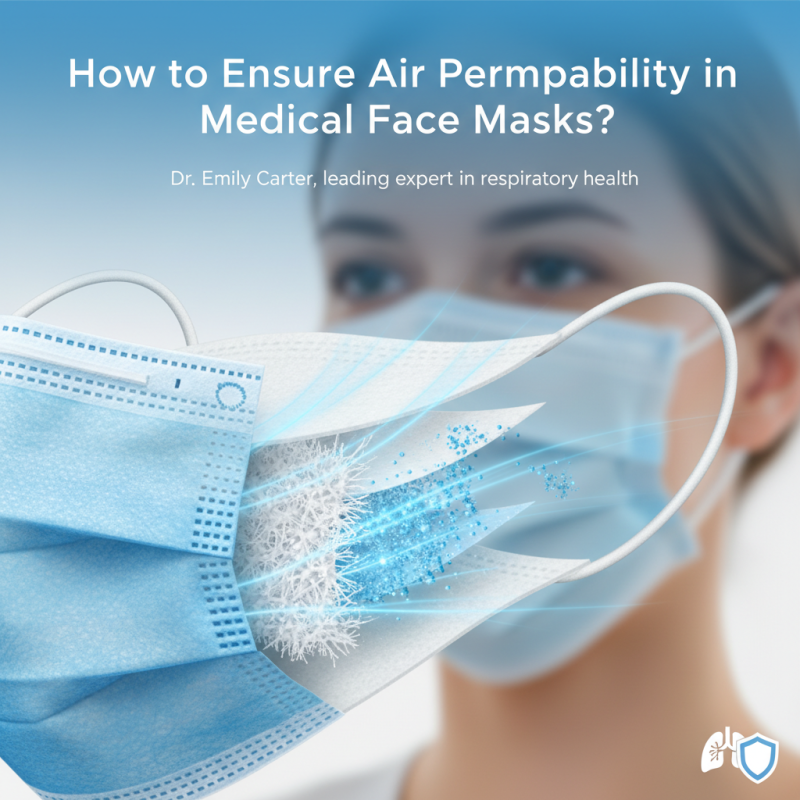
How to Ensure Air Permeability in Medical Face Masks?

Understanding Air Permeability in Medical Face Masks

Air permeability is crucial in medical face masks. Understanding how it works can enhance both comfort and safety. High air permeability allows for easy breathing. However, it must balance filtration efficiency. A study from the American Medical Association suggests ideal masks should have an airflow rate of at least 50 L/m²/s. This ensures adequate breathability while maintaining protection against airborne pathogens.

Filtration efficiency is often tested against various particles. For instance, the ASTM F2100 standard evaluates masks based on their ability to filter 0.1 µm particles. Masks with excellent air permeability might allow larger particles to pass through, raising concerns about their effectiveness. In practice, achieving this balance is challenging. Some masks felt comfortable but failed to meet critical safety standards.

It's also important to note that excessive air permeability can lead to a false sense of security. Users might underestimate risks when wearing comfortable masks. A comprehensive review highlights that some designs sacrificed filtration for comfort. This trade-off needs careful consideration in mask development. Adjusting materials and designs can improve air permeability without compromising safety.

How to Ensure Air Permeability in Medical Face Masks? - Understanding Air Permeability in Medical Face Masks

Material Type Air Permeability (L/m²/s) Filtration Efficiency (%) Breathability Index
Polypropylene 70 95 High
N95 Filter Material 45 98 Medium
Cotton 145 90 Very High
Polyester 60 96 High
SMS (Spunbond-Meltblown-Spunbond) 55 97 Medium

Materials Used for Enhancing Air Permeability in Masks

Air permeability is a critical factor in the effectiveness of medical face masks. Recent studies indicate that masks with higher air permeability ensure better breathability without compromising filtration efficiency. Certain materials have been identified as effective in enhancing this quality. Non-woven polypropylene is commonly used due to its favorable balance of filtration and air flow. Research shows that masks made from this material can achieve 70% to 95% filtration efficiency while maintaining adequate air permeability.

Additionally, advanced materials like electrospun nanofibers are gaining attention. They allow for fine particle capture while remaining lightweight. Tests reveal that these nanofiber masks can achieve air permeability rates around 50 L/m²/s. This is significantly higher than traditional fiber materials, which often struggle to provide both comfort and protection. However, the long-term sustainability of these materials raises concerns about waste management in the healthcare sector.

Incorporating natural fibers, like cotton blends, is another approach. They offer breathability but may sacrifice filtration efficiency. For instance, cotton often falls below the 50% mark regarding filtration capabilities yet provides comfort. The key challenge remains in finding a balance between breathability and protection, which is essential in maintaining user compliance during extended wear. Further research is necessary to evaluate the long-term implications of using various materials in medical face masks.

Testing Methods for Air Permeability in Face Masks

Testing the air permeability of medical face masks is crucial for ensuring their effectiveness. One common method involves using a device that measures airflow resistance. In this setup, a sample mask is placed in a test chamber. Air is then forced through the mask at a constant pressure. The amount of air that passes through helps determine the mask's breathability.

Another testing method involves a manikin head with a simulation of respiratory airflow. This approach provides a real-world scenario. The mask is worn on the manikin during the test. Changes in airflow are recorded to evaluate the mask’s performance. However, variations in mask fit can affect the results, leading to inconsistencies.

Understanding these testing methods is vital for mask manufacturers. Each test offers insights into the material’s properties. Yet, relying solely on laboratory results can be misleading. Real-world conditions, such as humidity and face shape, can influence mask performance. Therefore, manufacturers should consider a comprehensive assessment strategy. This ensures that masks provide adequate air permeability while maintaining safety standards, reflecting a commitment to both quality and innovation in healthcare.

Design Features Impacting Air Flow in Medical Masks

When designing medical face masks, air permeability is crucial. The structure of the mask directly influences how air flows through it. Many masks use multiple layers of fabric, which can impede airflow. This resistance can lead to discomfort for the wearer. It is essential to balance filtration efficiency with breathability.

Filter media play a significant role in airflow. Materials like polypropylene are often used for their fine filtration capabilities. However, their thickness can restrict air passage. The use of thin, well-designed layers can promote better airflow without sacrificing protection. Designers must consider the mask's fit as well. A snug but comfortable fit ensures that air doesn't leak from the sides, which can affect the mask's effectiveness.

Another factor is the mask’s structural design. Adding features like pleats or folds can enhance flexibility. This creates more surface area for air passage. Still, some designs may not optimize airflow. Designers should rethink traditional shapes to improve both comfort and breathability. Ultimately, achieving the right balance between protection and airflow remains a challenge for manufacturers.

Regulatory Standards for Air Permeability in Face Masks

Regulatory standards play a crucial role in ensuring air permeability in medical face masks. Agencies like the American Society for Testing and Materials (ASTM) and the World Health Organization (WHO) set guidelines to assess mask performance. For instance, ASTM F2100 specifies levels for fluid resistance and bacterial filtration efficiency. Masks must balance breathability and filtration. A mask with high filtration but low air permeability can lead to discomfort and reduced use.

A critical metric is the differential pressure, measured in pascals. Reports indicate that a suitable mask should ideally have a differential pressure below 5 Pa/cm^2 to maintain comfortable airflow. In a recent study, many masks exceeded this, making them less user-friendly. This discrepancy highlights a potential oversight in mask design prioritizing filtration over comfort.

Furthermore, testing data denotes that while some masks claim high efficiency rates, their air flow rates may not meet user needs. Clear guidelines and rigorous testing help address these issues. Continuous evaluation is essential to ensure that regulations adapt to new materials and technologies, fostering improved designs in face mask production.

Air Permeability Standards in Medical Face Masks

FAQS

: What is air permeability in medical face masks?

: Air permeability refers to how easily air flows through a mask. It affects comfort and safety.

Why is air permeability important?

High air permeability allows for comfortable breathing but must balance filtration efficiency to protect against pathogens.

What airflow rate is ideal for masks?

The ideal airflow rate should be at least 50 L/m²/s for adequate breathability and protection.

How is filtration efficiency tested?

Filtration efficiency is tested against particles, such as those using the ASTM F2100 standard for filtering 0.1 µm particles.

What happens if masks prioritize comfort over safety?

Comfortable masks may fail to filter effectively, compromising safety and creating a false sense of security.

What is the impact of excessive air permeability?

It can lead to underestimating risks while wearing a mask, making proper design crucial for effective protection.

How do regulations influence mask design?

Regulations set guidelines for air permeability and filtration. They aim to balance comfort with safety standards.

What is the importance of differential pressure?

A suitable mask should have a differential pressure below 5 Pa/cm². Higher levels may hinder airflow comfort.

Are all masks with high efficiency effective?

Not necessarily; some masks with high efficiency may not provide the airflow users need for comfort.

Why is continuous evaluation of regulations necessary?

It ensures guidelines adapt to new materials and technologies, promoting better mask designs for public health.

Conclusion

To ensure air permeability of medical face masks, it is essential to understand the fundamental principles of air flow and the materials used in mask construction. The selection of high-performance nonwoven fabrics and layering techniques can significantly enhance air permeability without compromising filtration efficiency. Moreover, specific design features, such as adjustable ear loops and pleated structures, play a vital role in promoting comfortable and effective air flow.

Testing methods for evaluating the air permeability of face masks are critical for ensuring compliance with regulatory standards. These methods assess the masks' ability to facilitate breathing while maintaining adequate protection. By adhering to established standards, manufacturers can develop masks that strike the right balance between safety and comfort, ultimately improving user experience during prolonged wear.

Amelia

Amelia

Amelia is a seasoned marketing professional with a wealth of expertise in our company’s core offerings. With an unwavering passion for driving growth and innovation, she plays a pivotal role in shaping our marketing strategies and enhancing brand visibility. A key aspect of her responsibilities......